

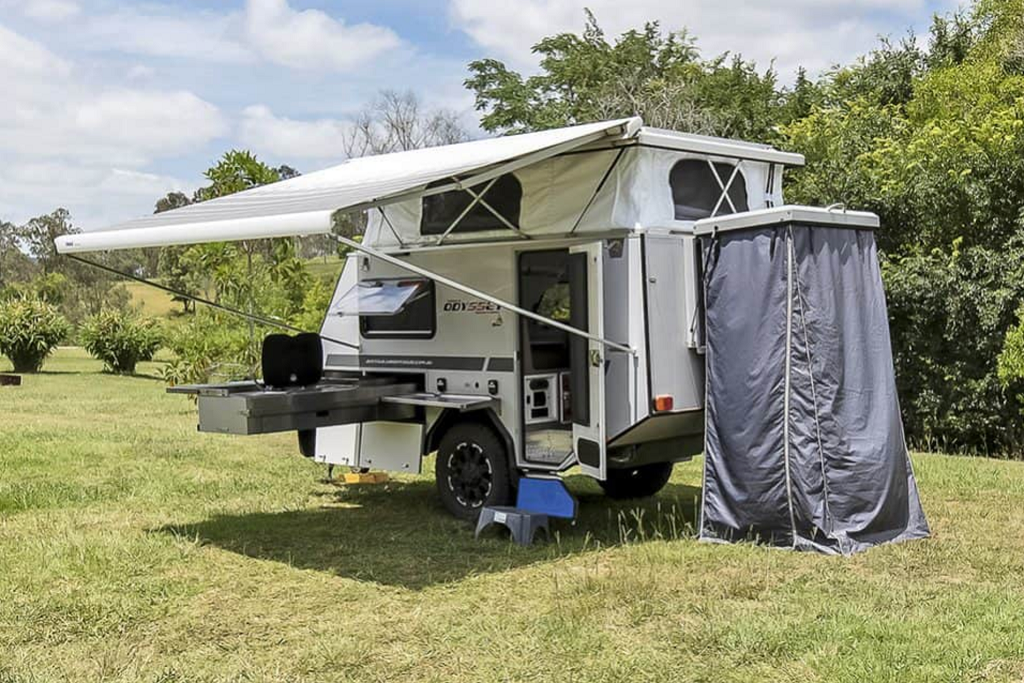
Trust us... you will never go back from a waterless composting toilet.
Myth-busting
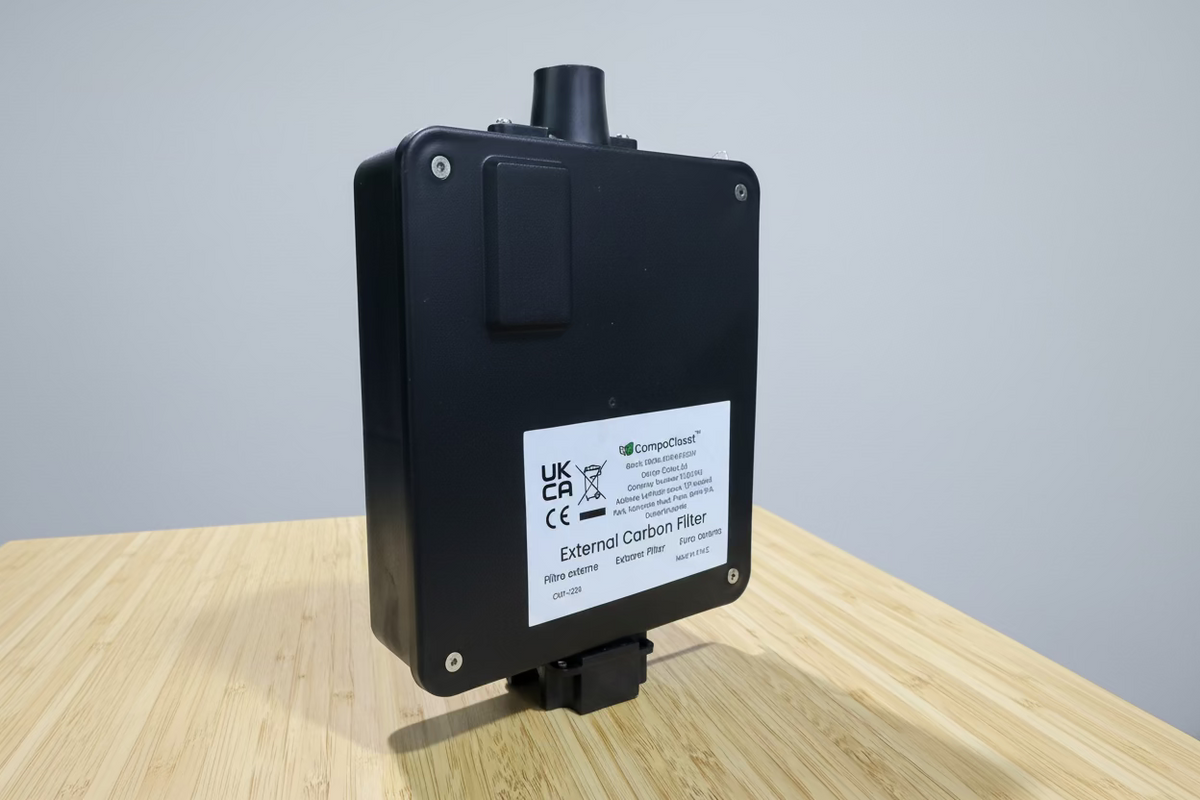
First let’s address a common myth - Separating composting toilets do not smell. I repeat - they DO NOT smell. You may say we’re lying when we say this - and you begin to recall a traumatic experience in an outhouse-style PIT toilet. You begin to recall the fear of your phone’s life in case it fell out of your pocket to a deep, dark, sewery grave. It’s ok, take a deep breath (unless you’re in one as you read this). Separating toilets, by contrast, separate pee from poop at source. The breakdown of poop is done aerobically (with oxygen present) by microbes and bacteria which prevents smell-causing substances. Removing the urine prevents ammonia slowing down the work of these helpful little microbes. While fresh poop can be stinky (who are we kidding?), our composting toilet features a fan that draws air through an activated carbon filter to prevent odours escaping where they’re not wanted.
Conserve your water
Whether you’re in your van, boat, caravan, tinyhome, tent or cabin, the odds are you’ve only got a finite quantity of fresh drinking water or waste storage capacity. It makes no sense to flush this precious resource down the toilet - literally. As common as it is to have finite water, it’s even more common to have finite waste storage. The average porta-potti style chemical loo has a waste storage capacity of around
4.75Gal (18L) , and a flushing capacity of 3.25Gal (12L), resulting in an overall storage capacity of just 1.5Gal (5.5L). No wonder chemical toilets need emptying so often!
Empty less often
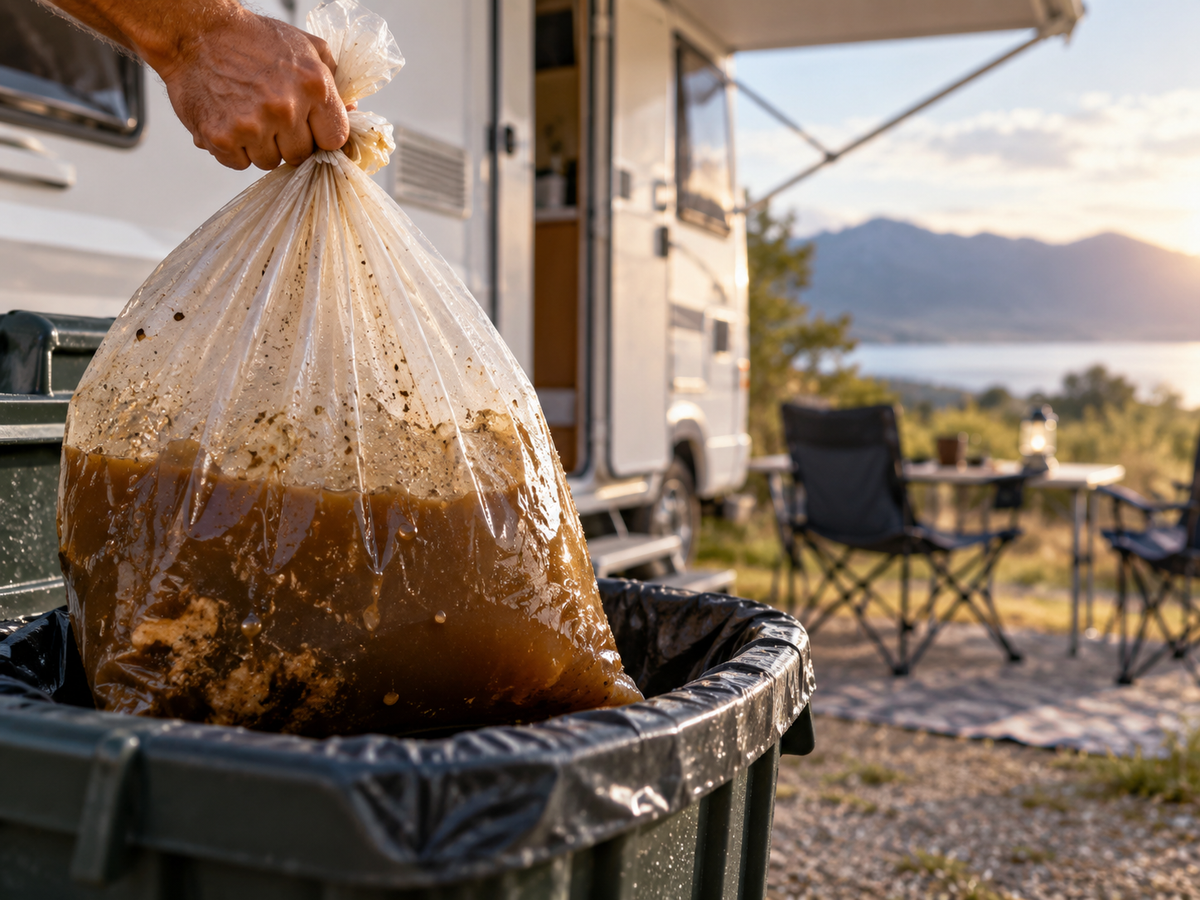
Chemical toilets need to be emptied every 2-3 days under moderate usage. In contrast, separating composting toilets need the solids compartment emptying every 10-28 days. Only the liquids bottle of a separating toilet will need emptying on this 2-3 day frequency. While pouring away a bottle of pee is nobody’s favourite pastime, it is far less unpleasant (in our opinion) than pouring away a chemical toilet and can be done harmlessly down a regular toilet or drain. If you're feeling generous and see a thirsty bush, remember you'll need to dilute the urine with 8 parts water not to harm it.
More Adventure!
Without the need to access disposal points for chemical toilets every 2-3 days and no need to carry extra water only to be flushed away, dry composting toilets allow you to venture out into nature further and for longer. No more carrying a spare cassette - be more adventurous, stay off-grid longer and do nature a favour by ditching the chemicals. Speaking of which…
What does that blue stuff in chemical toilets actually do? Firstly it is generally not intended to sanitise waste. Instead, the blue chemical commonly added to chemical toilets primarily has 2 objectives:
-
Hide the smell of the poo, wee and water cocktail.
-
Disguise the contents of the loo when you empty it.
By contrast, composting loos do not suffer from bad odours (see the first point above). So there you have it. You might still have questions like:
‘But the chemicals I use are environmentally friendly?’
True - there exist more environmentally friendly chemicals available for chemical toilets. But we believe, less is more. There are over 2 billion families sharing this amazing planet. If everyone too this stance, there would be 2 billion plastic bottles of chemicals unnecessarily going into the sewage system every year is 2bn too many. Every year.
But what happens when I... you-know... miss the hole?
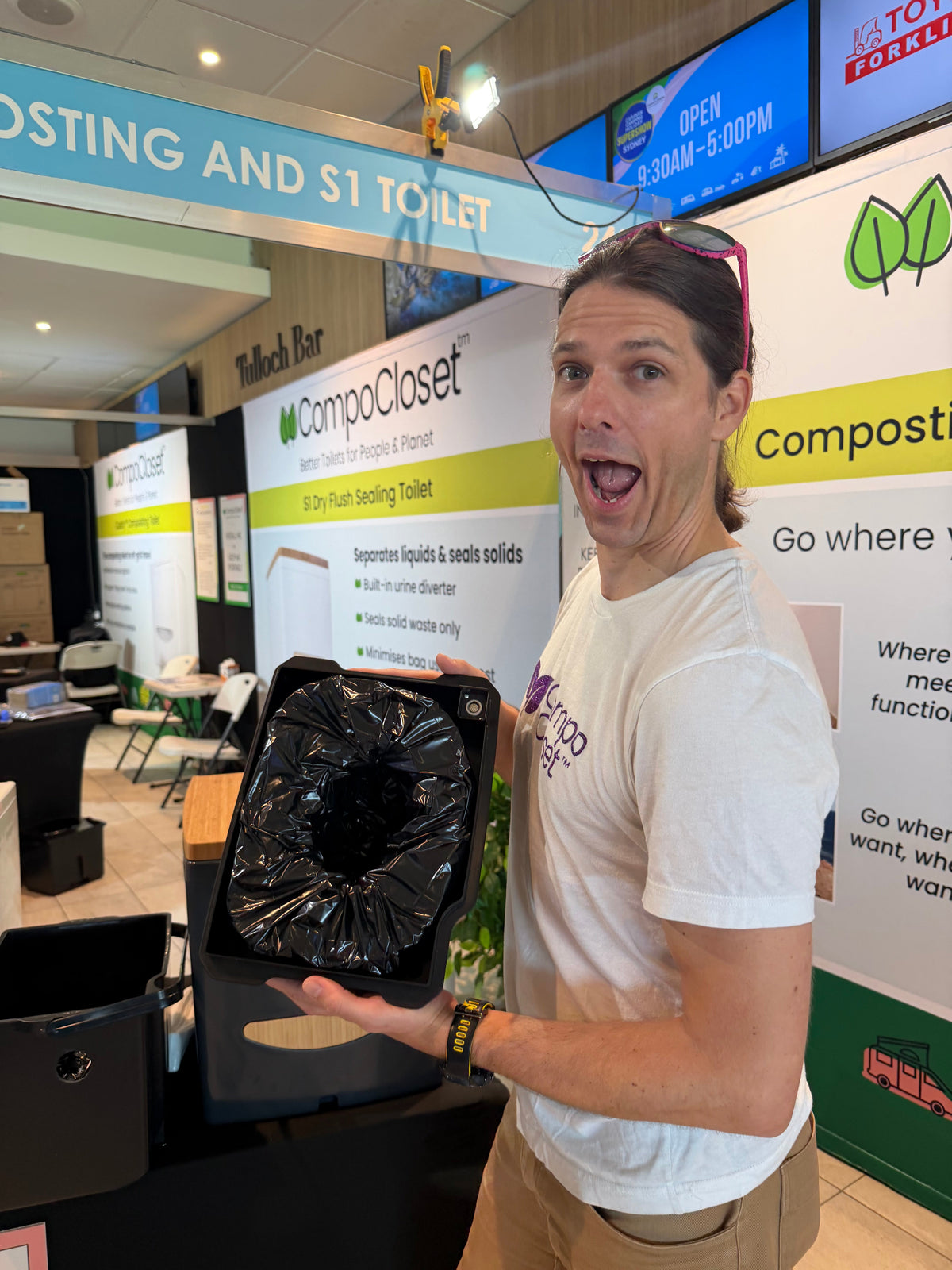
Nobody likes a messy loo and nobody wants a toilet brush in their tiny space. Compo Closet's patent pending design maximizes the 'drop zone' to minimise the need for cleaning up.
Share:
What is a composting toilet?
What is a composting toilet?