“I’ve Heard Composting Toilets Are Being Banned…”
If you’ve spent any time in camping Facebook groups lately, you’ve probably seen someone say:
“Composting toilets are being banned in WA!”
It is not true.
In truth, there are some new toilet/waste wording changes in certain WA national parks and sensitive QLD camping areas that support the use of sealed composting toilets, not a ban of them.
Composting toilets are still absolutely a responsible and accepted option, and unfortunately manufacturers of other toilet styles are perpetuating the misinformation for their own interests.
🏕️ What Parks Are Actually Saying Now
In some places — especially high-traffic or environmentally sensitive camping areas — the wording now commonly says something like:
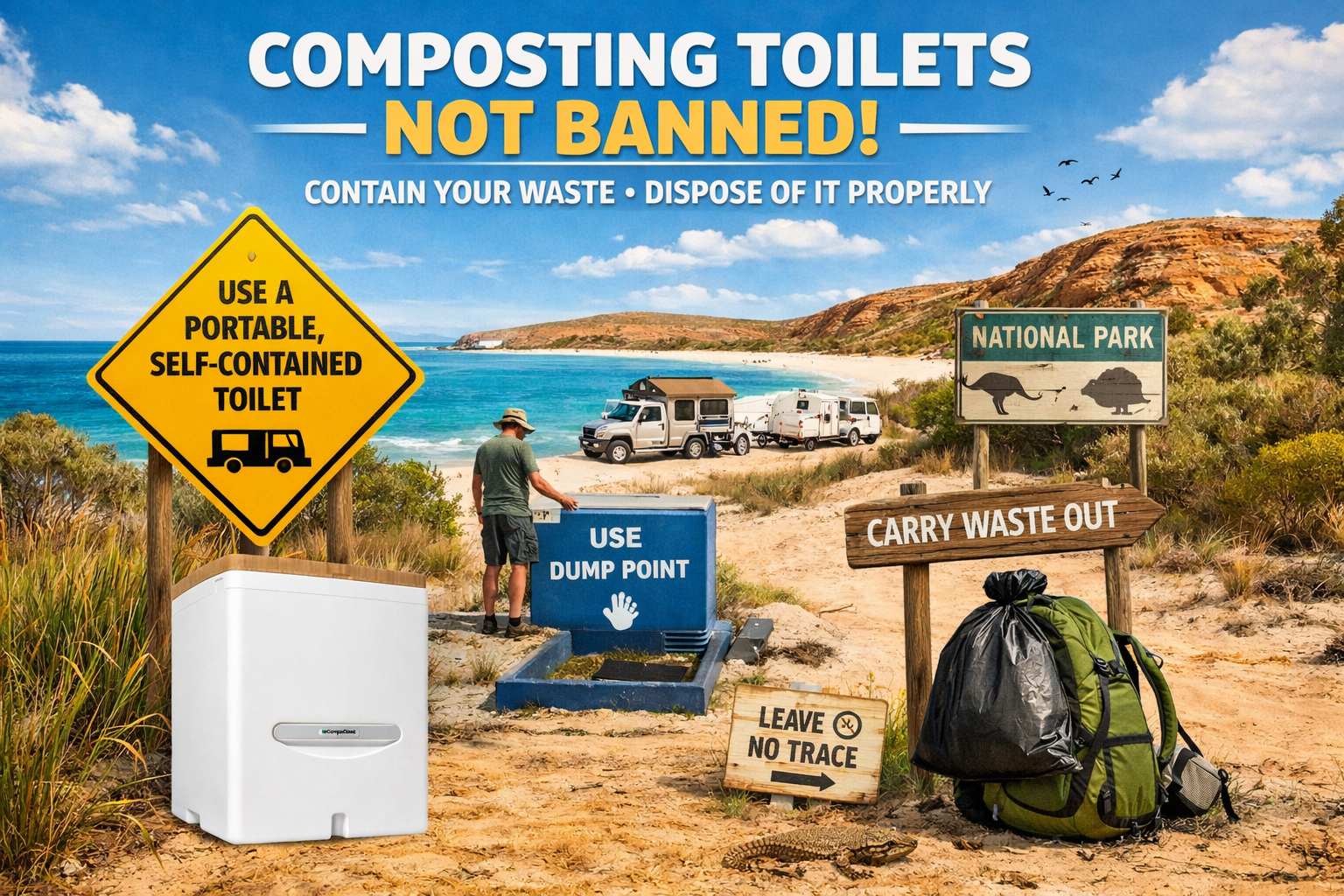
“Bring and use a portable, self-contained toilet that is approved for use in Australia and can be emptied into a dump point. Use the dump point or carry waste out of the park for disposal in an authorised dump point.”
That’s it.
The focus is on containment and responsible disposal, the rules are about:
-
Contained
-
Dump-point compatible ( Liquids from composting toilets can be emptied in dump points)
-
Or waste carried out properly (waste in or from the solids bin is easily carried out)
This wording is now common in WA national parks and places like Teewah Beach and parts of Inskip Peninsula in Queensland.
Francois Peron National Park in WA actually calls out Composting toilets as a specific approved option:
- "You must bring and use a sealed-unit flushing chemical toilet or a sealed-unit composting toilet. Portable toilets that collect waste in a bag are not permitted. Burying toilet waste is not permitted."
Ningaloo Station also specifies the following.
- Only sealed chemical or composting toilets permitted
- Bag-based portable toilets and burying waste are not allowed
- Dump point is for chemical toilet waste only – composting waste must be removed
So, yes, the understanding of toilet styles is maturing, and National Parks and other areas with sensitive environments are acknowledging that composting toilets are a useful method to protect the environment.
🍷 About That One Weird Moora Council Rule
There is one local council rule in WA that gets mentioned online, where a specific location lists a bunch of camping conditions — including no composting toilets and even no wine — along with other rules. This is the only place we are aware of that specifies composting toilets as not allowed. We have been told that this "campground" is actually just a carpark next to the visitors centre in the middle of town which is why there are so many rules. We suppose they don't want people emptying their liquids bottles in the carpark.
We know that whatever toilet system people have there will be irresponsible users, we can't control for that. Responsible users of true composting toilets would never empty their liquids bottle in a carpark!
It’s also worth noting that Mt Barnett Station in WA has specifically banned the Joolca Gotta Go.

🌿 So Where Do Composting Toilets Fit?
Proper, true composting toilets absolutely fit within the updated requirements — as long as it is:
✔ Contained
✔ Approved for use in Australia
✔ Dump-point compatible for liquids
✔ Or carried out responsibly
Liquids can go into an authorised dump point.
Solids? Most quality composting systems hold weeks or even months of solids before needing emptying, so you very rarely need to empty them in the middle of a trip. And if you ever do need to empty, you can easily carry that soil like waste out for disposal rather than tipping it somewhere inappropriate.
This is exactly what parks’ wording means by “dump-point compatible or carry out.”
If you're unsure what responsible disposal looks like, we’ve put together a practical guide here: Waste Disposal Guide.
💩 Not All “Composting Toilets” Are Equal
Part of the confusion online comes from mixing up different systems:
-
True composting toilets — sealed, liquid-solid-separating, designed for long-term use
-
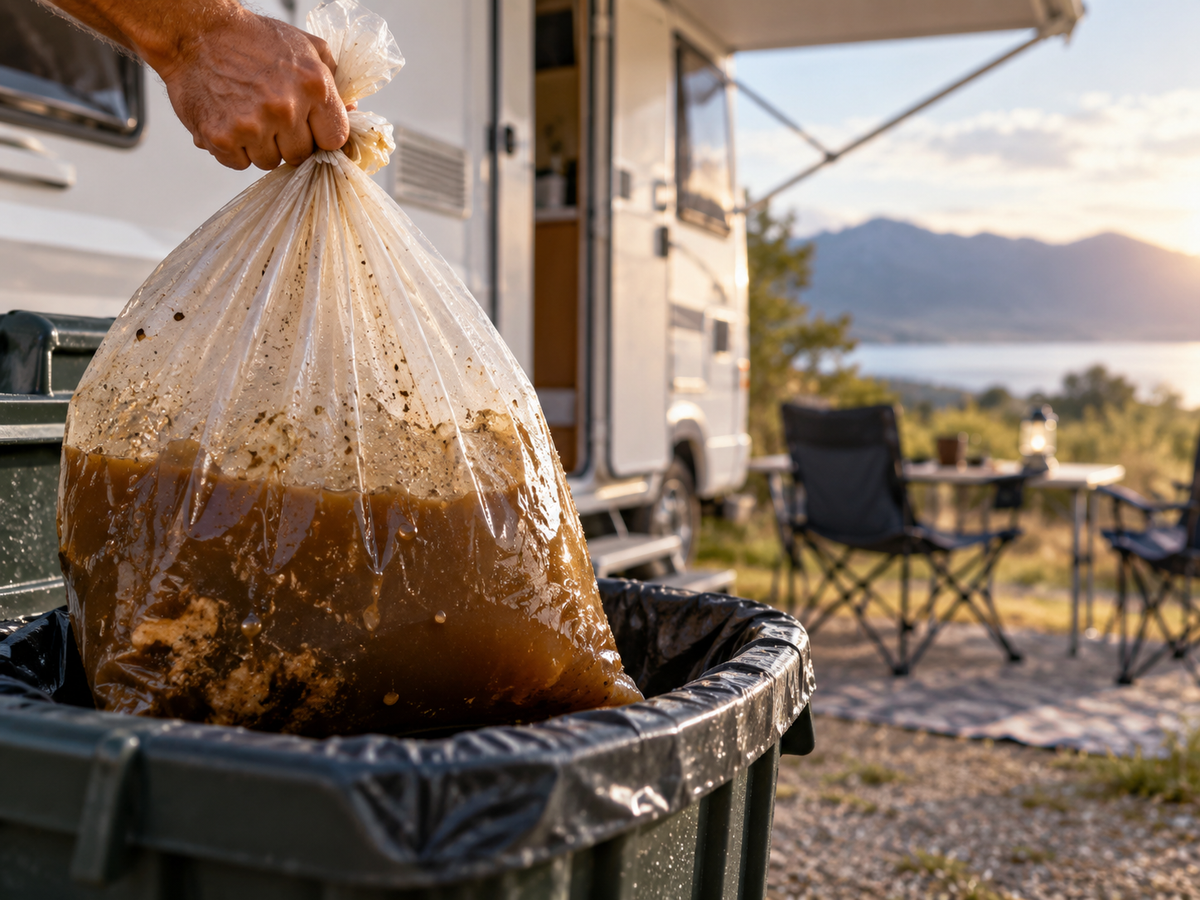
Simple bucket/bag toilets — basic liners that can easily be misused
When someone irresponsibly buries or dumps a bag of waste, it does cause environmental harm and that’s the kind of behaviour park rules are trying to prevent. But proper composting toilets, like Cuddy™ are very different and much more responsible.
🚫 Chemical Toilets Aren’t Perfect Either
Just as a side note, chemical toilets often get portrayed as the only allowed option in these discussions, but that’s not the case either.
Unfortunately, there are plenty of stories of chemical toilet waste being emptied onto the ground, into bushes, or beside campsites, which is exactly the sort of behaviour the new wording is trying to prevent, regardless of the system you use.
The problem isn’t the toilet type, it’s irresponsible use.
👉 The message from park managers is simple: Contain your waste and dispose of it properly.
🌏 Responsible Campers Are the Majority
Most owners of true composting toilets are among the most thoughtful campers out there. They:
-
Care about chemicals (or lack thereof)
-
Reduce blackwater transport
-
Minimise reliance on dump points
-
Camp in sensitive spots responsibly
💬 Final Word: Check the Rules, Not the Rumours
Social media can spread dramatic headlines fast.
Before assuming composting toilets are being banned, check the official park website or brochure for that specific location. You’ll probably find the wording is about waste containment and responsible disposal, not about banning composting toilets.
✅ The Bottom Line
Composting toilets are not being banned across Australia.
Some WA and QLD locations now require:
-
Self-contained toilets, either chemical or composting.
-
Can be emptied into a dump point
-
Or waste carried out
Proper composting toilets fit those rules when used responsibly.
The real message?
Contain your waste. Dispose of it properly. Respect the places we love to visit.
Share:
Cuddy™ Composting Toilet Waste Disposal Guide
Toilet Design Innovation: Evolution or Different Approaches?