

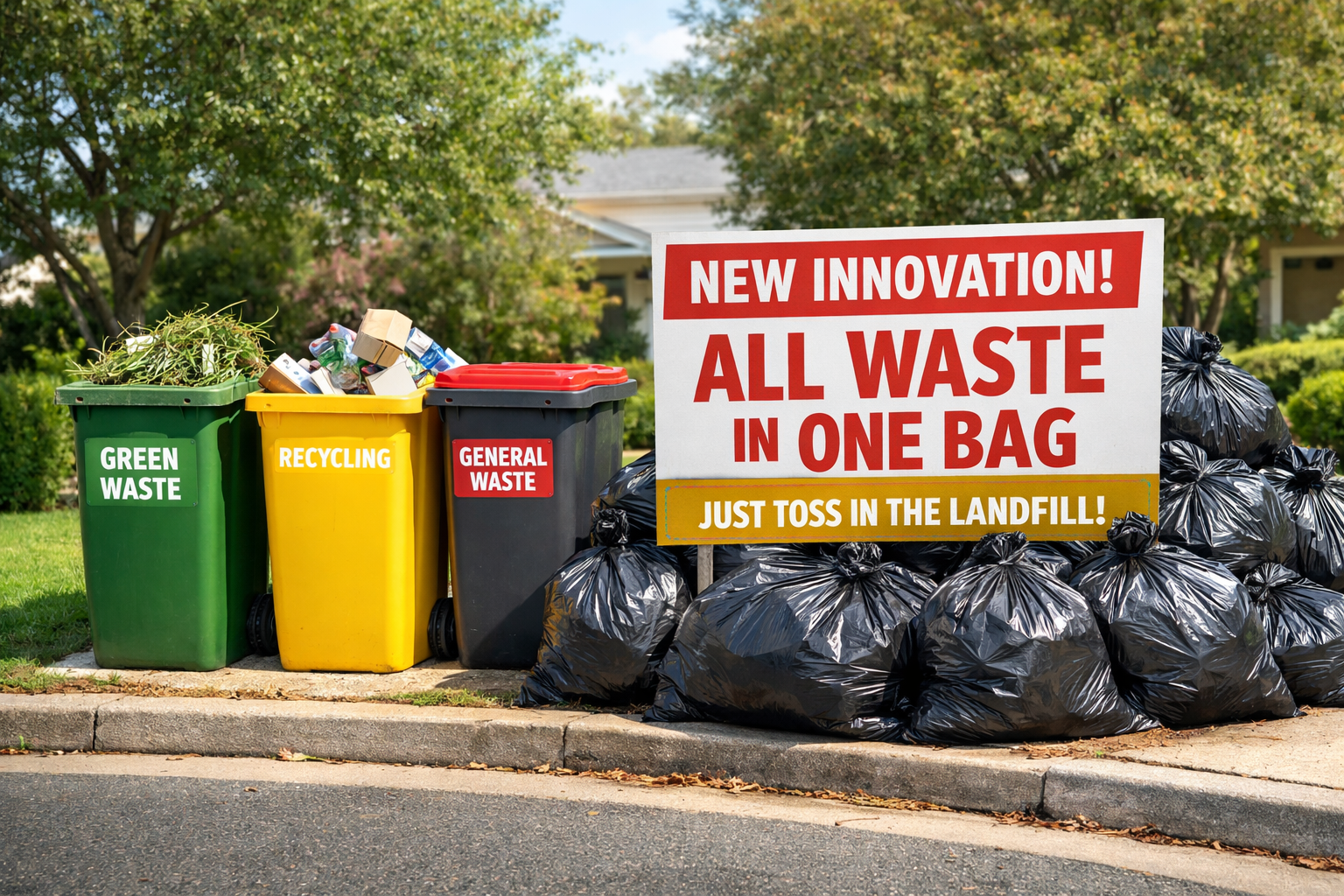
Imagine your local council announcing a brand new waste “innovation”.
From next year, there will be no recycling bin and no green waste bin. Everything; cardboard, food scraps, bottles and general rubbish go into special plastic bags, which you have to purchase. The bag is now simply collected and sent straight to landfill.
It’s described as simpler and more convenient, but progress?
Over the years, we’ve learned that different waste streams behave differently. Organic waste can break down, recyclables can be recovered and landfill can be reduced. The real advancement in modern waste management wasn’t better garbage bags, it was separation. Once everything is mixed together, the benefits of separation disappear, no matter how neatly it’s packaged.
Toilet systems have followed a similar path. Traditional chemical cassette toilets mix liquid and solid waste together in one tank, relying on chemicals to manage odour and breakdown. That was once considered standard.
Composting toilet systems changed that. By keeping liquids and solids apart, odour is reduced, chemicals are no longer necessary, and each waste stream can be managed appropriately. Separating liquids from solids was the genuine innovation in modern off-grid toilet design because it addressed the problem at its source, just like separating waste at home.
When new “innovative” bagging systems GO BACK to mix liquid and solid waste together again, even if sealed for disposal, the underlying chemistry hasn’t changed. The design has simply returned to a single mixed waste stream.
If we wouldn’t accept a return to single-bin landfill waste at home, it’s fair to question whether combining toilet waste again represents progress. Smarter systems come from understanding the materials we’re managing. In both household waste and toilet design, separation is the step forward.


Share:
Toilet Design Innovation: Evolution or Different Approaches?
Why More Caravan Owners Are Switching to Composting Toilets