
Cuddy™ Composting Toilet Waste Disposal Guide
A simple, responsible guide for managing your composting toilet waste in Australia. The key is “discretion, distance and dispersion” and following any specific directive from councils, national parks or property owners.
Responsible Disposal of Urine
If there’s a dump point or toilet nearby, please use that as your first choice for emptying the liquids container.
When camping remotely and no facilities are available, you can still dispose of urine responsibly:
· Walk at least 100 metres from any water source (creek, lake, beach, bore, etc.).
· Spread the liquid thinly over a wide area, don’t pour all 5 to10 litres in one spot.
· Choose bare ground or thick vegetation, not moss, fragile plants, or sand dunes.
· Avoid areas where others camp, cook, or walk.
This mimics how nature handles individual ‘bush wees’: small amounts dispersed across large areas break down quickly without smell or impact.
Responsible Disposal of Solids
Composting toilets like Cuddy™ separate and contain waste, giving you flexible options for responsible disposal depending on where you are.
The best option is to return it to the earth:
It’s acceptable to bury human waste responsibly, as long as you follow good practice, just like humans have been doing for 10s of 1000s of years. Remember unlike cassette toilets you are not burying sewage, you are burying the start of nutrient rich compost.
· Choose a spot at least 100 metres from any water source, track, or campsite.
· Dig a hole 250mm deep
· Empty and cover the composting material with soil, then disguise the site.
· It is best to keep toilet paper separate and burn or bin it, so it is not buried.
The earth is a vast composting system. When solids are buried correctly, nature breaks them down safely and efficiently. The key is discretion, distance, and dispersion.
Composting at home or in long-drop systems
If you already have a composting system at home or access to a long-drop composting toilet you can add solids from your Cuddy™ to that system.
Just make sure:
· You always follow local guidelines and directions
· You leave no trace
· The compost is used only on ornamental or non-food plants unless it’s part of a properly managed humanure system.
This method, like burying in the bush, lets you close the loop naturally, returning nutrients to the soil.
If unable to bury or place in an existing composting system
If you’re travelling and there’s nowhere appropriate to empty your solids container, you can set up a small extra solids bin to continue composting safely until you reach suitable facilities or location. Use a sealed, ventilated container such as a sturdy bucket with a tight lid and small air holes under a mesh cover. Keep the bin stored in an appropriate place out of direct sun and ensure it stays dry.
This gives you a hygienic, low-impact way to keep travelling self-sufficiently while letting the solids continue to compost naturally. When you return home or reach a suitable location as described above you can empty appropriately.
Or:
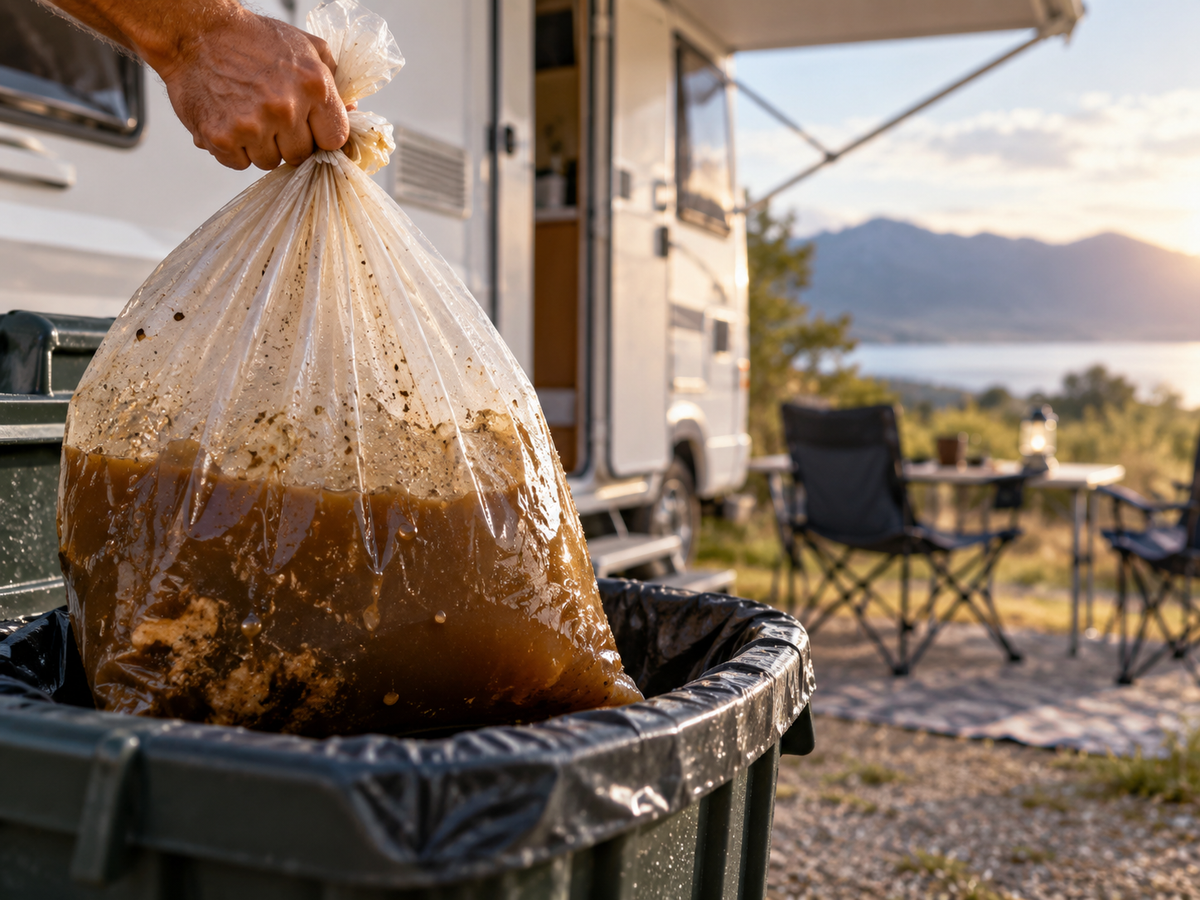
Seal the composting solids in a biodegradable or compostable bag (double bag is best) and place it in your general rubbish. The solids will go to landfill but will breakdown, unlike nappies some sanitary items and non-compostable bags from automatic sealing toilets.
Do not use dump points, they are only for liquid and dissolved waste from chemical toilets only.
By managing our waste this way, you can protect the environment and travel further, stay longer and explore more.
Share:
Cuddy vs OGO: The Full Comparison (Specs, Price & FAQs)
“I have heard that composting toilets are being banned.”